
Review · PORTO
Wine Tasting with Tapas Walking Tour in Porto
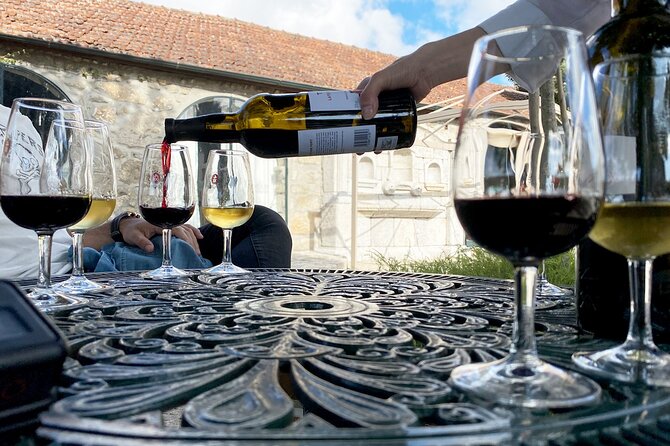
Porto tastes best one small glass at a time. This two to three-hour outing combines a port cellar visit in Gaia with a walk through Ribeira and a second wine stop in Porto. I like the two port tastings at Quinta dos Corvos and the chance to sample Vinho Verde and Douro wines without arranging separate visits. I also like the friendly guides, including Ana, Emma, Daniela, Rita, Alex, and Goncal Monteiro, who are often praised for making the city walk lively and personal. The main drawback is the food: tapas may mean one cod croquette or fish ball, not a full spread.
At $54.31 per person, this is best seen as a short introduction to Porto, not a serious wine course or a meal. You get a local guide, drinks, snacks, and a useful walk between the two sides of the Douro. Still, the experience can feel light on wine explanation, and the uphill walking may be tiring if you are not ready for Porto’s slopes.
Key points to know before booking
- Two port samples come first: Quinta dos Corvos provides the most focused wine stop, with a cellar visit and tastings of two port styles.
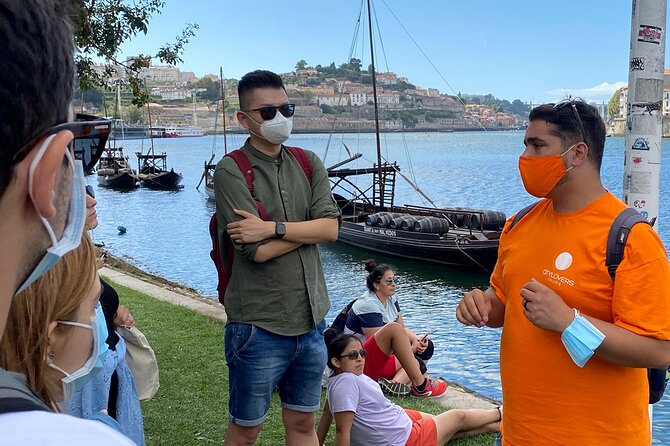
- The route crosses Porto and Gaia: You walk near the Luís I Bridge, through Ribeira, and along narrow cobbled streets.
- The second tasting includes Vinho Verde and Douro wine: Three additional wines are generally served, but the amount of explanation can vary.
- Tapas are modest: Plan on small Portuguese snacks, often a cod cake or croquette with olives, rather than dinner.
- Small groups can make a big difference: Groups of four to six have received especially warm praise, while larger groups may feel crowded.
- It is for adults only: The minimum age is 18, and the maximum group size is 30 people.
Starting beside the Ponte Pênsil
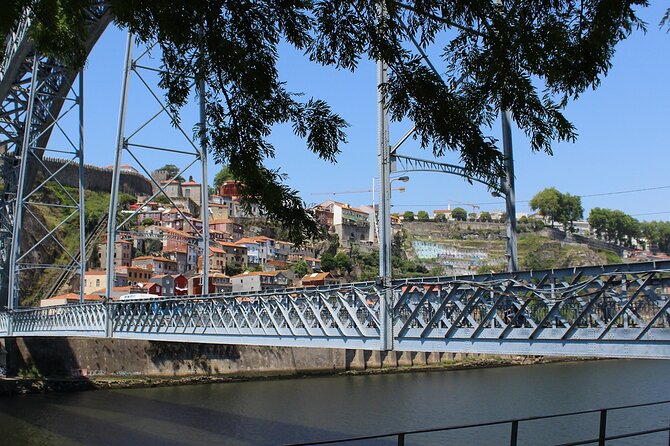
The meeting point is at Pilares da Ponte Pênsil in Porto’s Ribeira area. This puts you near the lower level of the Luís I Bridge and close to the river, so you begin in one of Porto’s most atmospheric parts.
The route quickly introduces you to the city’s unusual geography. Porto sits on one side of the Douro, while Vila Nova de Gaia, home to many port cellars, sits across the water. That crossing is not just a transfer between stops. It helps you understand why port wine is so closely tied to this particular stretch of river.
You should arrive ready to walk on cobbles and slopes. One group found the route more uphill than expected, and the guide did not always wait for people who fell behind. That is useful planning advice: wear sensible shoes, keep your pace steady, and tell the guide early if you need a slower walk.
The tour is offered in English and uses a mobile ticket. Public transportation is nearby, but hotel pickup and drop-off are not included. Since the experience may draw up to 30 people, the feel can range from a personal stroll to a fairly large walking group.
More Tapas and Wine Tours in Portugal
- Porto: Wine Tasting with Tapas Walking Tour
★ 4.4 · 1,541 reviews - Lisbon Food Tour with 10+ Tastings of Local Delicacies & Wines
★ 5.0 · 1,339 reviews - Porto Wine Tasting Experience with Portuguese Tapas Plate
★ 4.7 · 356 reviews
Quinta dos Corvos and the first two port glasses
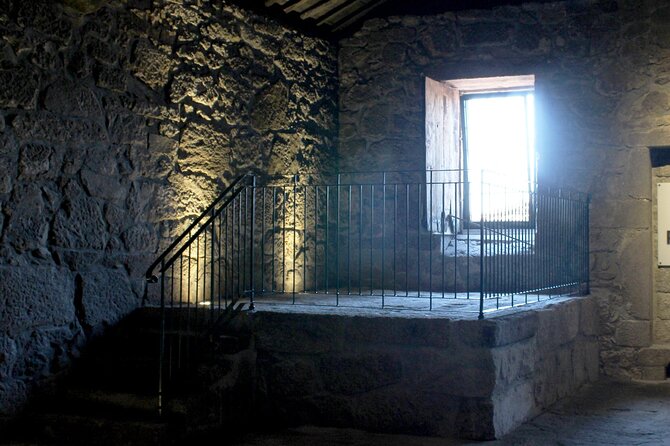
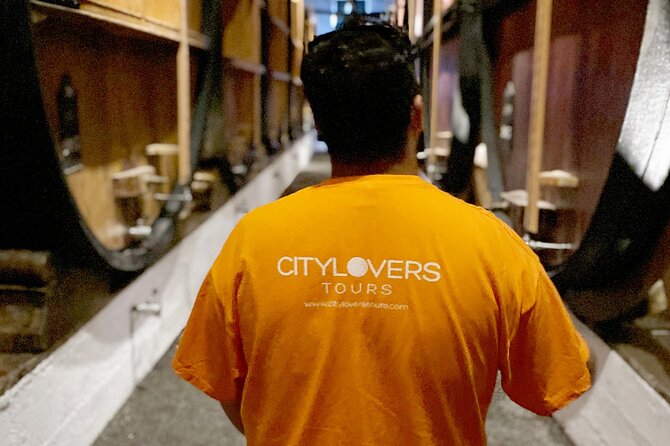
The strongest part of the experience is usually Quinta dos Corvos, where you spend about an hour and fifteen minutes. This is the one proper port cellar visit, rather than simply a tasting at a bar.
The cellar stop gives you a basic introduction to port production and the different styles of this fortified wine. The most specific tasting information available points to a seven-year-old white port and an eight-year-old tawny port. That is a useful pairing because it lets you compare a lighter style with a more developed, nutty one.
Some guides have added context about port production, British involvement, and the role of the Douro region. Ana, Daniela, and Rita have drawn particular praise for making this part friendly and easy to follow. When the group is small, you may have room to ask questions and more time to discuss what is in your glass.
You should set your expectations correctly. This is not a long technical seminar about grapes, aging, or vineyard conditions. Some people found the port tasting interesting but felt that the cellar was also focused on selling bottles. That is common at commercial wine stops, so you can enjoy the visit without feeling obliged to buy anything.
The first stop works best if you are new to port. It gives you a foundation before the later tastings. If you already know your tawny from your ruby and want a detailed look at production, you may find the visit too brief.
Crossing back through Ribeira
After Gaia, the route returns toward Porto and spends about 30 minutes in Ribeira. This is the sightseeing portion of the tour, and it is more about orientation and stories than formal visits.
You pass narrow cobbled streets, old buildings, and the riverfront. The walk helps connect the wine trade with the city around it. You hear about Porto’s past, local wine culture, and the people who shaped the city. Guides such as Emma and Goncal Monteiro have been praised for sharing city facts in a warm, conversational way.
This part can be a fine way to get your bearings on a first day in Porto. You see the river from different angles, cross between the two river districts, and learn which areas you may want to revisit later. One person especially liked the chance to meet people from several countries while walking and tasting.
The walking commentary is not always consistent. Some guides have stayed beyond the allotted time to chat and answer questions. Other groups found long stretches with little explanation. That difference seems to depend heavily on the guide and on group size.
The route also takes time. One group described it as a lot of walking with only two real stops. Another felt that the walk was a good introduction to Porto but wished the itinerary had been arranged more simply on one side of the river. You should choose this experience for the combination of sightseeing and wine, not for a packed schedule of attractions.
Wine Chalet Portugal and the second tasting
The final stop is Wine Chalet Portugal at Rua Nova da Alfândega 65, where you spend about an hour. Here you taste Vinho Verde and wines from the Douro Valley, paired with Portuguese petiscos.
The stated wine lineup is two port samples at the cellar, followed by Vinho Verde and three other regional wines. Several accounts describe six wines in all: two ports, one green wine, and three Douro or other Portuguese wines. That gives you a useful range, especially if you want to compare fortified port with dry table wines.
The second stop is more casual than Quinta dos Corvos. You may receive wine in a bar or restaurant setting rather than during a structured presentation. Some people enjoyed the mix and found the wines good. Others felt the bottles were served with little information, and one person had to ask to read the labels.
That matters if your main goal is to learn about Portuguese wine. A good guide can fill in the gaps, but you should not count on a detailed explanation of every grape, producer, or region. The experience is more about sampling several styles than mastering them.
The setting may also be less comfortable for a large group. One party found the second venue cramped, while another encountered loud music. Smaller groups had a better chance of hearing the guide and enjoying a relaxed final tasting.
Same city, a different plate:
- Lisbon: Tapas & Drinks with Fado Live Performance
★ 4.6 · 749 reviews - Lagos: Ponta Piedade Sail & Caves Cruise w/Portuguese Tapas
★ 4.8 · 360 reviews - Albufeira/Vilamoura: Winery Tour with Wine Tasting and Tapas
★ 4.7 · 336 reviews - Porto Wine Tasting Experience with Portuguese Tapas Plate
★ 5.0 · 265 reviews
What the tapas really mean
The word tapas can create the wrong picture here. You are not signing up for a long meal with several substantial plates.
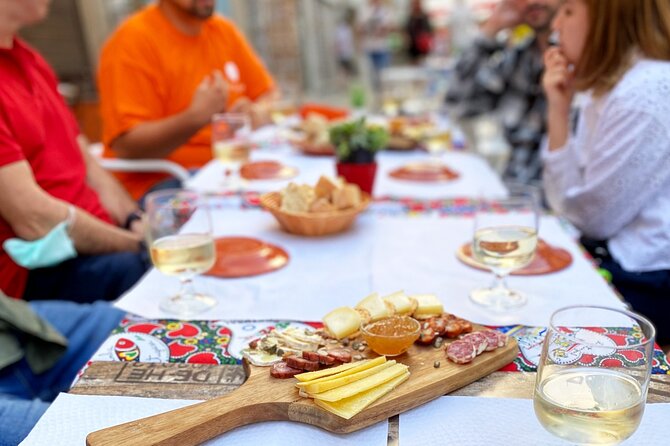
The food may include a cod croquette or fish ball, olives, and perhaps a few additional snacks. Some groups received two types of petiscos, but several descriptions mention only one small cod-based item. One person advised eating beforehand, which is sensible.
I would treat the food as a pairing, not a meal. The snacks give you something salty to eat with the wine, but they are unlikely to satisfy you after a full afternoon of walking. If you want a proper lunch or dinner, plan it before or after the tour.
This is also where the price feels less generous. At $54.31, the drinks and cellar visit provide much of the value. If you are paying mainly for tapas, you may feel disappointed. If you are paying for a guided introduction to Porto with five or six tastes, the calculation is fairer.
Guide quality makes the biggest difference
The strongest praise goes to the guides. Ana is described as funny, personable, and attentive, with one small group enjoying her willingness to stay and chat. Emma received praise for explaining the city while walking along the waterfront and across the bridge. Daniela has been noted for her city and port knowledge, while Rita was praised for her kindness and choice of stops.
Alex helped one group with city history as they walked toward the train station. Goncal Monteiro called a late-arriving participant and helped the person reach the group in time for the first tasting. Kat also stayed beyond the planned time for conversation.
These details point to the best version of the tour: a friendly local host, a small group, clear storytelling, and enough time to ask questions. The weaker version is less satisfying: a guide who gives little commentary, a crowded bar, and wine served without much context.
The guide also has to manage the route carefully. Porto’s slopes and uneven streets are part of the setting, but they can separate a group. If you need a slower pace, say so at the start instead of trying to catch up silently.
How the experience uses two to three hours
The timing is compact but not rushed in the usual sense. About 75 minutes go to the cellar, around 30 minutes to the Ribeira walk, and roughly an hour to the final tasting. That leaves little room for delays or extended sightseeing.
The experience combines two activities that many people would otherwise book separately: a walking orientation and a wine tasting. I like that efficiency for a first afternoon in Porto. You get a sense of the city’s layout and sample several local drinks without spending a whole day on a wine excursion outside town.
The tradeoff is depth. There is no long visit to several port houses, no major vineyard outing, and no extensive food tour. The route visits one port cellar and one later tasting location. If you want several formal cellar tours, this is not the right choice.
The maximum group size is 30. That is large enough to affect the pace and the sound level, though some departures may be much smaller. The best accounts came from groups of four, six, or even a private-feeling small party.
Is $54.31 a fair price?
The value depends on what you want from the afternoon. The fee includes the guide, the port cellar entry, wine tastings, and snacks. You also avoid the work of choosing a cellar, finding a second tasting room, and planning a route across the river.
For a first-time visitor who wants an easy introduction, that convenience has real value. You can taste two ports, several Portuguese wines, and see Ribeira and Gaia in one outing. The price is less appealing if you expect a large meal, detailed wine education, or several winery visits.
Some people considered the cost high for two stops and small snacks. Others found it worthwhile, especially when the guide was engaging and the group was small. I would call it a reasonable introductory tour, but not a bargain.
The experience requires a minimum number of participants, so a departure can be canceled with an alternative date or a full refund offered. You can cancel for a full refund up to 24 hours before the start time. Because schedule changes have caused stress for some people, keep your booking details and meeting time easy to check, especially if you are arriving in Porto by train.
Who should book this Porto walk?
I would recommend it to you if you:
- Are visiting Porto for the first time
- Want a short city orientation with wine included
- Enjoy port but do not need advanced wine instruction
- Like meeting other people in a shared group
- Can manage cobbles, stairs, and uphill walking
- Prefer a guided plan to arranging two wine stops yourself
I would think twice if you:
- Need a substantial meal
- Want several formal port cellar tours
- Prefer quiet tasting rooms
- Expect every wine to be explained in detail
- Have difficulty with uphill walking
- Are booking mainly for Portuguese food
The tour is also a good early-visit activity. The walk can help you understand Porto’s river districts, and the tastings introduce styles you may want to order later. I would not schedule it immediately before a train or flight, since meeting times and walking pace can vary.
Final verdict: book it for the introduction
I would book this tour if I wanted a friendly, compact first look at Porto’s port culture and riverfront. The Quinta dos Corvos visit and two port samples are the clearest highlights, while the later Vinho Verde and Douro tasting adds useful variety.
I would book with modest expectations about food and instruction. Think of the tapas as small snacks, and think of the wine stops as sampling sessions rather than a full class. If you get a guide such as Ana, Emma, Daniela, Rita, Alex, Goncal, or Kat, the personal touch can make the afternoon feel very worthwhile. If you need a full meal or serious wine study, spend the $54.31 elsewhere.
FAQ
How long does the wine tasting and walking tour last?
The experience lasts approximately two to three hours. The planned stops include about one hour and fifteen minutes at Quinta dos Corvos, 30 minutes walking through Ribeira, and one hour at Wine Chalet Portugal.
How many wines are included?
The experience includes two port samples at Quinta dos Corvos, followed by Vinho Verde and wines from the Douro Valley. The stated tastings generally amount to two ports and three additional wines.
Are tapas included?
Yes, snacks are included. The food may be limited to small Portuguese petiscos, such as a cod croquette or fish ball and olives, so you should not rely on it as a full meal.
Where does the tour start and finish?
The tour starts at Pilares da Ponte Pênsil in the Ribeira area of Porto. It finishes at Wine Chalet Portugal, Rua Nova da Alfândega 65, Loja 2, Porto.
Is there a minimum age?
Yes. Participants must be at least 18 years old.
Can I cancel for a full refund?
Yes, if you cancel at least 24 hours before the experience start time. Changes or cancellations made less than 24 hours in advance are not accepted for a refund.
More Tapas Walking Tours in Portugal
- Albufeira: Old Town History Walking Tour with Tapas & Wine
★ 4.7 · 96 reviews - Private Lisbon Walking Tour with Premium Port Wine and Tapas Tasting
★ 5.0 · 61 reviews - Albufeira History Walking Tour with Wine and Tapas
★ 5.0 · 47 reviews - Barcelona Tapas and Wine Experience Small-Group Walking Tour
★ 5.0 · 5,804 reviews
Just added around Portugal
- Private Sunset Hike, Tapas & Wine at Secret Beach★ 5.0 · 2 reviews
- Sintra Food & Wine Experience – Tapas, Tastings & Culture★ 4.5 · 17 reviews
- Sunset Hike, Tapas & Wine at Secret Beach★ 5.0 · 28 reviews
- Fado nights with Algarvian tapas tasting★ 5.0 · 11 reviews
- Wine, Tapas and Winery Tour★ 5.0 · 2 reviews
- 3 table wines & 5 Port wines + Tapas★ 4.5 · 14 reviews
- Private Tuktuk Tour with Portuguese Tapas and Wine★ 5.0 · 33 reviews
- Private tapas tuk tuk tour through Lisbon★ 5.0 · 12 reviews
Tapas and Wine Tours, compared.

Montserrat Half-Day Tour with Tapas and Gourmet Wines
Read our review →
Montserrat & Cogwheel Train, Gourmet Wine Tasting & Tapas/Lunch
Read our review →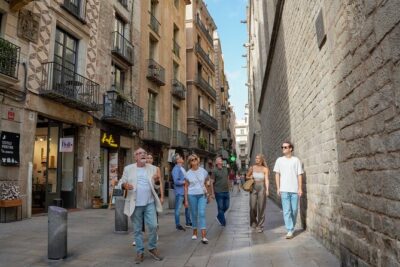
Barcelona Tapas and Wine Experience Small-Group Walking Tour
Read our review →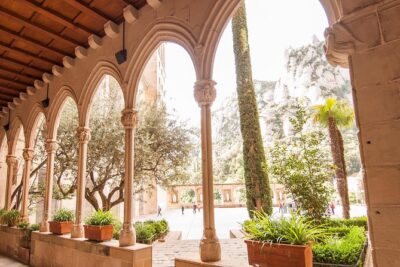
Montserrat with Black Madonna & Medieval Winery with Tapas/Lunch
Read our review →
Montserrat and Winery Tour with Tapas or Lunch
Read our review →
Tapas Walking Tour with Food, Wine, and History
Read our review →
Madrid Tapas & Wine Tasting Walking Tour – Small Group Local Bars
Read our review →
Sevilla Food Tour: Tapas, Wine, History & Traditions
Read our review →Browse the lists this tour appears in