
Review · BILBAO
Basque Pintxos and Tapas Cooking Class in Bilbao
Small plates, big Basque flavor. This two-and-a-half-hour cooking class in Bilbao gives you a practical way to understand pintxos, from the famous Gilda to cod brandada and Basque toast. I especially like the fully hands-on format and the generous open bar of local wine and drinks. The main consideration is the price, $96.54 per person, which makes the class best suited to people who want a full evening activity rather than a quick cooking demonstration.
The class takes place in a new cooking school at Salbe Plaza and is limited to 12 people. That small group should make it easier to follow the chef, ask questions, and work at the counter without feeling lost. Chef Mikel receives repeated praise for his friendly teaching, stories, and practical cooking advice, though the 6:00 p.m. start means you should treat this as dinner, not as an early sightseeing stop.
Key points at a glance
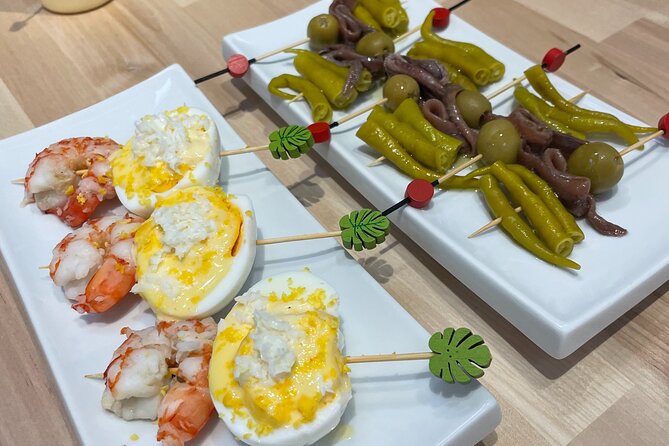
- Four pintxos made from start to finish: Prepare Bilbainito, La Gilda, cod brandada, and spicy garlic mushrooms before sitting down to eat them.
- Basque ingredients have a story: Learn why local peppers, anchovies, cod, potatoes, prawns, and txampis matter in regional cooking.
- A true hands-on class: You are not simply watching a chef work. You help prepare the food and receive cooking tips along the way.
- Open bar included: Local wines and drinks are available during the class, adding to the relaxed evening atmosphere.
- Chef Mikel leads the class: His friendly style, stories, and clear instruction are among the strongest parts of the experience.
- A sweet finish: Torrijas, called Basque toast here, close the meal and have become a memorable part of the class for many people.
Why this class is a smart way to meet Basque food
Bilbao is a city where eating is part of the daily rhythm. Pintxos are not merely snacks placed on a plate. They are small, carefully built bites that let you sample several flavors in one evening. A cooking class gives you more than a list of dishes. It helps you understand how these foods fit into Basque life.
I like that this class includes both traditional and modern pintxos. You will work with familiar ingredients such as eggs, prawns, bread, potatoes, mushrooms, anchovies, and cod, but the finished dishes reflect the careful presentation associated with Basque cooking.
The class also makes sense for anyone who feels uncertain about ordering pintxos in a bar. After preparing the food yourself, you will recognize several ingredients and understand more of the names on a menu. You may still need help with every dish in Bilbao, but you will have a much better starting point.
At 4.9 out of 5 from 73 ratings, with 99 percent recommending it, the class has a strong record. The most consistent praise centers on Mikel’s warmth, his cooking skill, and the easy social atmosphere. That matters in a small group class, since a stiff or hurried instructor can spoil an otherwise good meal.
More Pintxos Tours in Bilbao:
- The Authentic Bilbao Pintxos, Food & Wine Tour with a Local
★ 5.0 · 360 reviews - Bilbao Food Tour: Pintxos, Drinks, and Tapas with a Local
★ 5.0 · 88 reviews - Bike tour with Pintxos & Drinks in Getxo (Scenic Bilbao Seaside)
★ 4.5 · 68 reviews
Arriving at Salbe Plaza for the 6:00 p.m. start
The meeting point is Salbe Plaza, 6, 48007 Bilbao, and the class ends at the same address. It is near public transportation, which is useful for an evening activity, though you should still allow time to find the exact entrance and arrive ready to begin at 6:00 p.m.
The scheduled length is about two hours and 30 minutes. That is long enough for several dishes and a relaxed meal, but short enough to fit into a compact Bilbao visit. I would avoid pairing it with another fixed evening booking. Cooking, eating, conversation, and wine can all take a little longer than expected.
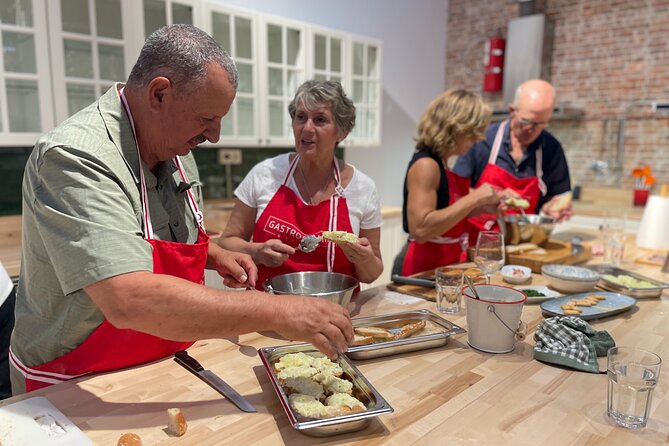
The maximum group size is 12 people. This is a practical limit for a class where everyone needs room to chop, mix, assemble, and follow instructions. A small group also gives you a better chance to ask Mikel about technique or ingredients instead of simply trying to keep up.
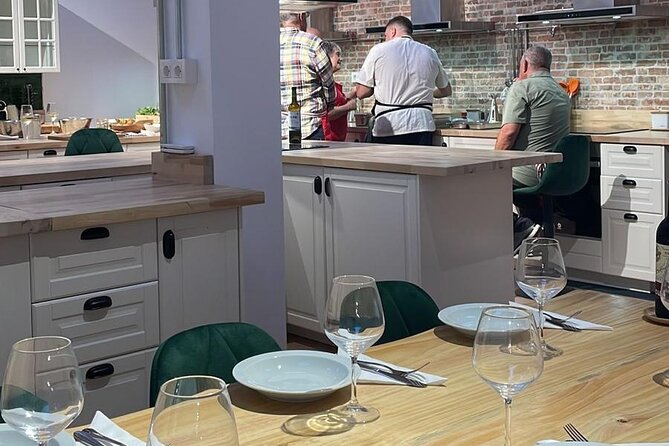
The school is described as recently opened and top notch, giving the class a fresh setting rather than the feel of a temporary demonstration space. The atmosphere appears designed for participation, with space for both preparation and sitting down together to eat.
Starting with drinks, starters, and Basque food customs
The evening begins with drinks and starters before the main cooking work gets underway. The open bar includes local wines and other drinks. This is more than a minor extra. At nearly $100 per person, the drinks help make the price easier to assess, especially if you value an evening that combines instruction, food, and social time.
You should still keep your own pace. The class is built around an open bar, and one person specifically described the wine pours as very generous. That can be enjoyable, but the cooking remains the point of the evening. If you want to concentrate on knife work, sauces, and timing, moderate pours are your friend.
Mikel also explains the traditional importance of seasonal local ingredients. This is one of the most useful parts of the class because it connects the recipes to the Basque region instead of treating pintxos as generic tapas.
The distinction matters. Pintxos often arrive in small portions, but good pintxos rely on balance: salt from anchovies or cod, acidity from peppers or other ingredients, richness from mayonnaise or potatoes, and texture from bread or vegetables. You will see those ideas in nearly every dish prepared during the class.
Bilbainito, a simple bite with careful balance
The first listed starter is the Bilbainito, made with a boiled egg, fresh prawns, and homemade mayonnaise. It is a straightforward combination, but it puts attention on preparation and texture.
The egg brings softness, the prawns add a delicate seafood flavor, and the mayonnaise ties everything together. This is the kind of pintxo where small details matter. Overcooked egg or heavy mayonnaise could flatten the dish, while properly prepared ingredients keep it light enough for the beginning of a meal.
For you, this starter offers a gentle introduction to the class. The ingredients are recognizable, and the dish does not require an unusual taste. It also gives Mikel a natural opportunity to explain how a small bite can feel complete without a long ingredient list.
More Spanish Cooking Classes in Bilbao:
- Pintxos and Tapas Cooking Class in Bilbao
★ 5.0 · 38 reviews - Bilbao: Basque Pintxos and Tapas Cooking Class
★ 4.8 · 36 reviews - Barcelona Paella Cooking Class with Market Visit, Tapas & Sangria
★ 5.0 · 2,531 reviews - Spanish Cooking Class Paella Tapas and Sangria in Madrid
★ 5.0 · 1,340 reviews
Building La Gilda with olives, peppers, and anchovies
La Gilda is one of the best-known pintxos in the Basque Country. The class uses olives, local peppers, and anchovies, bringing together briny, sharp, and salty flavors on a small skewer or bite.
This is a useful dish to learn because it shows how Basque cooks create impact with very little. You are not preparing a complicated sauce or spending hours at the stove. The work is in choosing good ingredients and arranging them so every bite has the right balance.
The local peppers add character, while the olives and anchovies provide the strong savory edge that makes La Gilda so distinctive. If you usually prefer mild food, this may be the boldest starter of the evening. If you enjoy salty snacks, it may be the dish you remember most clearly.
It also gives you a recipe you can recreate at home without special equipment. That practical quality adds value to the class. You are learning something that can work as a simple party appetizer, not just a dish that belongs in a professional kitchen.
Preparing cod brandada with bread and Basque potato
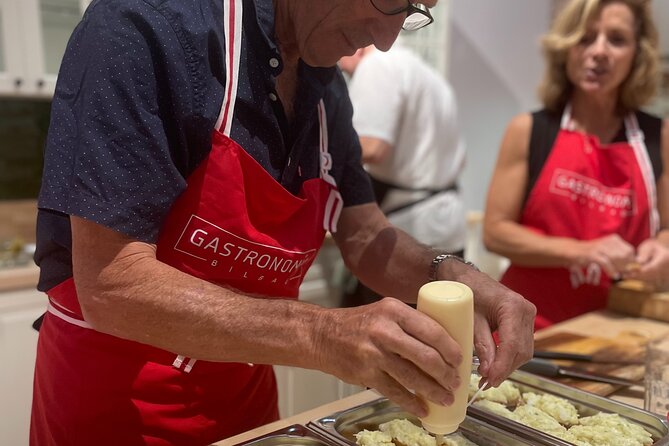
Cod brandada is the most substantial of the savory dishes. It combines fresh bread, local Basque potato, and desalted grilled cod.
The preparation brings together ingredients that are closely linked to northern Spanish cooking. Cod is naturally salty, so desalinizing it is an important step. The potato and bread provide body, making the dish filling without turning it into a heavy main course.
This is where the class moves beyond assembling ingredients. You learn how to manage a central component, how to bring several textures together, and how to make a small portion feel satisfying. The grilled cod also gives the dish a stronger, more focused flavor than the earlier starters.
I would pay close attention here if you cook fish at home. The recipe shows how a modest amount of cod can carry a dish when paired with the right base. You also get a clear example of how Basque cooking can be both rustic and refined.
Cooking spicy garlic mushrooms with local txampis
The fourth savory pintxo uses spicy garlic mushrooms, called txampis locally. The dish is built around the umami flavor of the mushrooms, with garlic and heat providing extra depth.
This course brings vegetables into the center of the meal. Mushrooms can seem simple, but cooking them well requires attention to moisture and heat. If they become watery, the flavor weakens. If they are cooked properly, they develop a deeper savory taste that works well with garlic.
The spicy element gives the menu contrast. You have already tasted seafood, anchovies, eggs, and potatoes. The mushrooms offer an earthy change of direction.
This may be the most useful dish for adapting at home because mushrooms are easy to find and work as a side dish, toast topping, or small plate. Mikel’s practical tips are likely to be especially helpful here, since small changes in cooking time can make a large difference.
Sitting down to taste your four pintxos
After the preparation comes the best part: eating what you made. You taste four different pintxos and share a charcuterie board, with local wine and drinks available throughout the evening.
The meal is not designed as a formal restaurant tasting menu. It is more relaxed and social. You have handled the ingredients, made mistakes or adjustments along the way, and then sit down with the group to see how everything turned out.
That format gives the food more meaning. A Bilbainito is no longer just a bite with egg and prawns. You remember how it came together. La Gilda becomes a lesson in balance. Cod brandada shows how potato, bread, and fish can form a complete small plate.
The charcuterie board adds something different, since it requires no cooking and lets you concentrate on conversation and local flavors. It also helps round out the meal while the class moves from instruction to dinner.
Ending with torrijas, the Basque toast
Dessert is torrijas, presented as Basque toast. Torrijas are a comforting style of sweet bread, and here they provide a warm, familiar finish after the savory pintxos.
This course receives especially strong praise. One person described the Basque toast as the best dessert they had enjoyed in years, while another highlighted the chance to surprise family and friends with the recipe later.
That tells you something useful about the class. The dessert is not an afterthought. It is a recipe you may want to remember and make at home, particularly if you enjoy simple sweets built from everyday ingredients.
The class also provides a commemorative apron as a souvenir. That is a pleasant extra, especially if you enjoy collecting practical reminders of cooking classes rather than decorative keepsakes.
Mikel’s teaching style and the group atmosphere
Chef Mikel is the central personality of the evening. His teaching style is described as friendly, conversational, and generous with recipes and advice. He also shares stories from his path toward becoming a master chef and from working with other chefs.
That personal background adds life to the instruction, but it should not replace the cooking. Here, the available details suggest that Mikel keeps the group on track while leaving room for laughter and questions.
I would recommend this class to a solo visitor for that reason. The group format makes it easy to share a meal with people you have just met, and the cooking gives everyone an obvious topic to discuss. It also suits couples who want something more active than a restaurant dinner.
Families can enjoy it too, based on the warm response from a family group. Still, the evening includes an open bar and fairly detailed food preparation, so adults and older children may get more from it than very young children.
Is $96.54 a fair price?
At $96.54 per person, this is not a budget meal. You should compare it with the cost of an evening that includes a guided activity, four homemade pintxos, a charcuterie board, dessert, and local wine and drinks.
The price makes stronger sense if you want to learn. A restaurant meal would let you taste pintxos, but it would not show you how the dishes are assembled or explain the role of local ingredients. The class also gives you recipes and techniques that can be used after your holiday.
The value is less clear if you only want a quick introduction to Basque snacks. In that case, you may prefer to visit several pintxos bars and choose dishes at your own pace. This class asks you to commit 2 hours and 30 minutes and to take part in the preparation.
The small group, chef instruction, open bar, and included meal all support the price. I would book it for the experience and the skills, not simply for the amount of food on the plate.
Who should book this Bilbao cooking class?
This class is a strong match if you:
- Want to learn how Basque pintxos are made, not only eat them
- Enjoy cooking with a chef who shares stories and practical tips
- Prefer small group activities with a maximum of 12 people
- Want a social evening that works well for solo visitors and couples
- Like seafood, anchovies, mushrooms, potatoes, local peppers, and charcuterie
- Would appreciate an open bar of local wine and drinks
- Want recipes you can recreate for family or friends at home
It may be less suitable if you dislike seafood, do not drink, or prefer to explore restaurants independently. You can still enjoy the food, but several dishes use prawns, anchovies, or cod, and the open bar is part of the evening’s appeal.
You can cancel free of charge up to 24 hours before the 6:00 p.m. start for a full refund. Changes made within 24 hours are not accepted, and the class requires a minimum number of people. If that minimum is not met, you are offered another date or experience, or a full refund.
Should you book the Basque Pintxos class?
I would book this class if you want Bilbao food culture explained through your own hands. Mikel’s friendly teaching, the small group, the open bar, and the four-part menu create a full evening rather than a short demonstration.
The best reason to choose it is the balance between learning and enjoyment. You prepare La Gilda, cod brandada, mushrooms, and Bilbainito, then sit down to eat them with a charcuterie board and torrijas. The main drawback is the price, but the included food, drinks, instruction, and apron help justify it.
Book it early if the date fits your schedule. It is booked an average of 24 days ahead, and the limited group size makes last-minute availability less certain. For a first visit to Bilbao, this is a practical way to leave with both a better sense of Basque food and a few recipes worth making again.
FAQ
Where does the cooking class start?
The class starts at Salbe Plaza, 6, 48007 Bilbao, Bizkaia, Spain.
What time does the class begin?
The cooking class starts at 6:00 p.m.
How long does the experience last?
It lasts approximately 2 hours and 30 minutes.
Where does the class end?
The activity ends back at the meeting point at Salbe Plaza.
How many people can join the class?
The class has a maximum of 12 participants.
Is the class offered in English?
Yes. The class is offered in English.
What food do you prepare?
The menu includes Bilbainito with boiled egg, prawns, and homemade mayonnaise; La Gilda with olives, local peppers, and anchovies; cod brandada with bread, Basque potato, and desalted grilled cod; spicy garlic mushrooms; and torrijas, known here as Basque toast.
Are drinks included?
Yes. The experience includes an open bar of local wines and drinks.
Can you cancel for a full refund?
Yes. You can cancel at least 24 hours before the start time for a full refund. Cancellations or changes made less than 24 hours before the start time are not refunded or accepted.
More Workshops in Bilbao
- Pintxos Preparation Workshop with Lunch in Bilbao
★ 4.5 · 39 reviews - Barcelona: Cocktail Master Class by Mixologist with Tapas
★ 4.7 · 959 reviews - Valencian paella cooking class, tapas and visit to Ruzafa market.
★ 5.0 · 828 reviews - Taste of Spain: Tapas Cooking Class with Bottomless Wine Pairing
★ 5.0 · 414 reviews
Just added around Bilbao
- Pintxos Preparation Workshop with Lunch in Bilbao★ 4.5 · 39 reviews
- Pintxos and Tapas Cooking Class in Bilbao★ 5.0 · 38 reviews
- San Sebastian Private Tour, Pintxos & Winery Visit from Bilbao★ 5.0 · 14 reviews
- Hike Gaztelugatxe, Fishing Port Bermeo & Pintxo Lunch from Bilbao★ 5.0 · 46 reviews
- Bilbao Pintxo Tasting Paired With Spanish Wines★ 5.0 · 55 reviews
- Gourmet Pintxos & Premium Wines small groups Food Tour★ 5.0 · 7 reviews
- Full-day private Bilbao tour (Guggenheim museum & full pintxo lunch included)★ 5.0 · 5 reviews
- Pintxo and Tapas tour with local Food Expert★ 5.0 · 50 reviews
Pintxos Tours, compared.
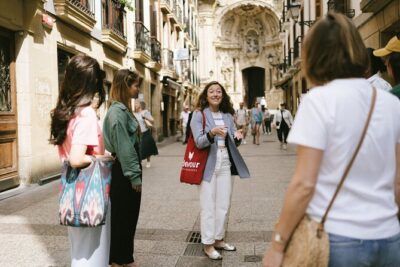
San Sebastian Old Town Pintxos & Wine Tour Small Group Tour
Read our review →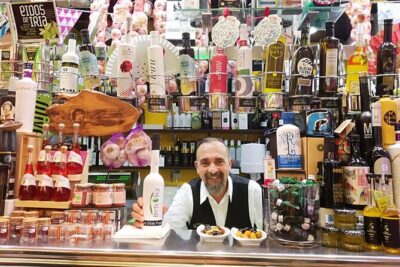
San Sebastian Pintxo Food, Wine & Market Foodie Tour(Small Group)
Read our review →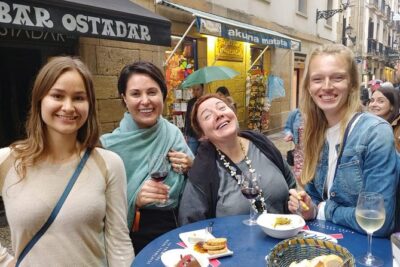
Discover San Sebastián’s Best Pintxos on a Unique Culinary Tour
Read our review →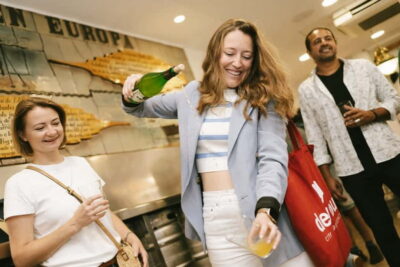
San Sebastian Food Tour: Pintxo Tasting Paired with Wines
Read our review →
The Authentic Bilbao Pintxos, Food & Wine Tour with a Local
Read our review →
Browse the lists this tour appears in