
Review · MADRID
Madrid: Paella & Sangria Classes- Seafood, Chicken & Vegan option
Paella tastes better when you help make it. This three-hour Madrid class combines hands-on cooking with sangria, tapas, and a shared meal, so you get more than a restaurant lunch. I like that everyone contributes to one large paella, and I like that recipes are provided for cooking the dishes again at home. The main caution is that the class includes plenty of alcohol, and some diners found the rice and seafood slightly undercooked.
The class takes place at Paurora Experiences on Calle de Carretas, close to public transportation in central Madrid. It costs about $87.41 per person, which is fair if you value a meal, instruction, drinks, and a social evening in one package. Dietary needs must be reported ahead of time, especially if you want the vegan or vegetarian version.
Key points to know before booking
- You make one shared paella together: This is not a solo cooking station for each person. You chop, stir, and cook as a group.
- The three-hour session begins with sangria: You prepare the drink before moving on to tapas and paella.
- Two paella styles are available: The standard choices are seafood or chicken, with a vegan option available by arrangement.
- Tapas are part of the meal: Expect olives, Spanish omelette, and tomato toast with Iberian ham.
- The finish is generous with alcohol: Sangria and a tasting of three traditional Spanish liquors are included.
- The group can reach 25 people: Smaller groups may feel more personal, while larger groups create a livelier social evening.
Starting at Calle de Carretas in central Madrid
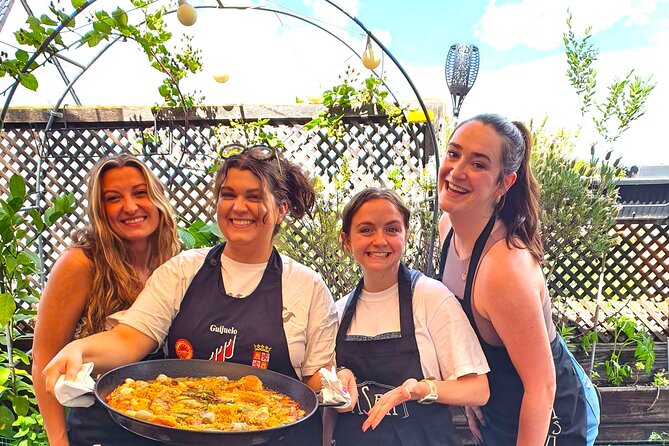
You meet at Paurora Experiences, C. de Carretas, 14, 2a, in Madrid’s Centro district. The location is near public transportation, and the activity returns to the same address, so you do not need to arrange a separate ride back after dinner.
The experience lasts about three hours. That gives the class enough time for instruction, food preparation, cooking, and a sit-down meal without feeling like a rushed demonstration. You should arrive ready to participate rather than simply watch. The class is offered in English, and past sessions have included instructors such as Tony, Yireles, Anthony, Pedro, Carlos, Juan, Paulo, and Aurora.
The maximum group size is 25 people. That is not tiny, so your experience may depend on the number booked that day. Groups of around 16 have been described as comfortable and interactive. In a full class, you may have to wait your turn for certain tasks, but the shared format means you are still part of the finished dish.
The setting includes a cooking area, bar area, and air-conditioned dining room. That last detail matters in Madrid, especially during hot weather. The space has also been praised for its clean, polished design, giving the class a more organized feel than a casual kitchen demonstration.
More Paella Cooking Classes in Madrid
- Spanish Cooking Class Paella Tapas and Sangria in Madrid
★ 5.0 · 1,340 reviews - Madrid Tapas & Paella Cooking Experience with Local Market Visit
★ 5.0 · 432 reviews - Tapas & Paella Cooking Class in Madrid with a Professional Chef
★ 5.0 · 177 reviews
Making traditional sangria before lunch
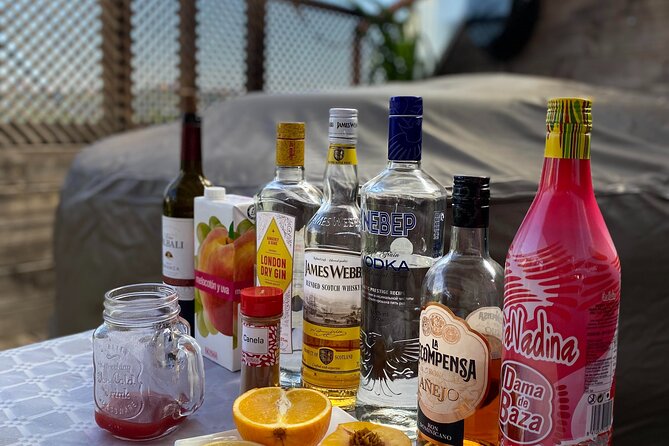
The first practical lesson is sangria. You help prepare it from the beginning rather than receiving a premixed glass at the table. The listed recipe includes wine, peach juice, rum, whiskey, gin, vodka, grenadine syrup, cinnamon, fruit, and ice.
That is a serious pour, not a light fruit punch. The class includes alcoholic drinks throughout the experience, and the sangria can be served in both red and white versions. You also receive bottled water, which is useful, but you should still pace yourself. The class later adds three traditional Spanish shots, so anyone driving or planning a busy afternoon afterward should take the alcohol content seriously.
The sangria portion works well as an opening activity because it gives the group an easy task while people introduce themselves. You are not yet dealing with hot pans or precise cooking times. Instead, you are learning how the drink comes together and sharing the first round with the group.
This is also where the social character of the class becomes clear. You might arrive with family or a partner and end up chatting with people from several countries. If you prefer a quiet, highly technical cooking lesson, the conversation may feel distracting. If you enjoy food as a way to meet people, it is a strong part of the experience.
Tapas, olives, and the Spanish table
Before the main dish, the class serves several small Spanish bites. The menu lists anchovy-stuffed olives, tortilla de patatas, and tomato toast topped with Salamanca ham.
The Spanish omelette is made with potatoes, eggs, onion, and olive oil. It is a useful introduction to a simple dish that depends more on timing and texture than on a long ingredient list. The tomato toast, known as pan con tomate, adds a fresh contrast to the salty Iberian ham.
These are not just filler while you wait for the rice. They give you a taste of everyday Spanish food and help turn the class into a full meal. The snacks also make the alcohol easier to handle than drinking sangria on an empty stomach.
The menu includes ham, so vegetarians and vegans need to speak up before the class. Vegetarian substitutions have been made successfully, and a vegan paella option is advertised. Still, the menu shown for the standard session is not vegan, and the provider specifically asks you to report allergies or intolerances in advance. Do not wait until you arrive and expect every adjustment to be possible.
Preparing the paella as one group
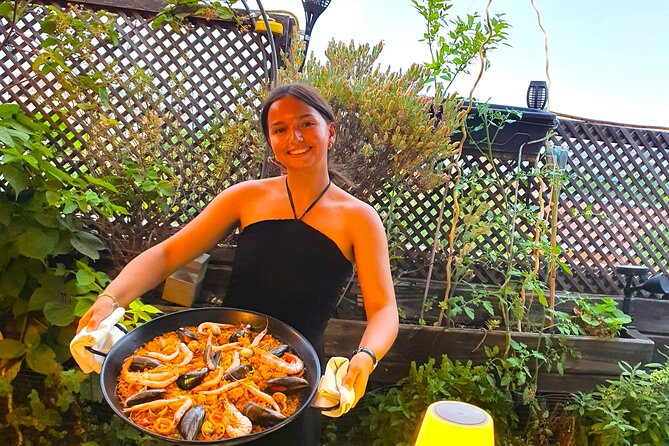
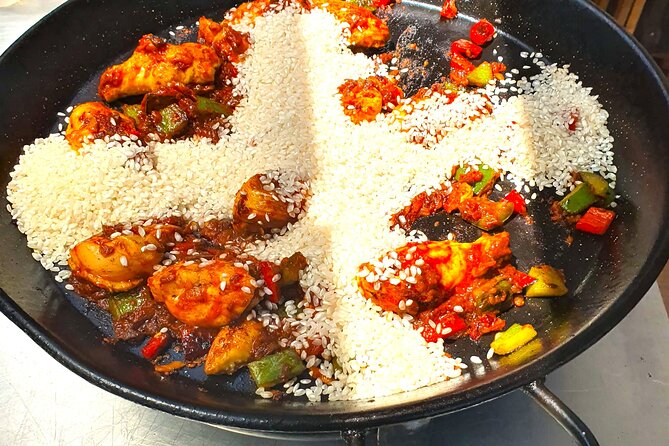
The central activity is the paella. You chop ingredients, help prepare the base, and cook the rice with guidance from the chef. The seafood version uses rice, fish fumet, mussels, peppers, clams, squid, garlic, tomato, and saffron. The chicken option follows the same general cooking format with chicken in place of the seafood.
I like the group method here. Each participant does not receive a separate miniature pan, which can make a class feel more like a production line. Instead, everyone helps create one shared dish, then eats it together. That arrangement encourages conversation and gives the meal a real communal feel.
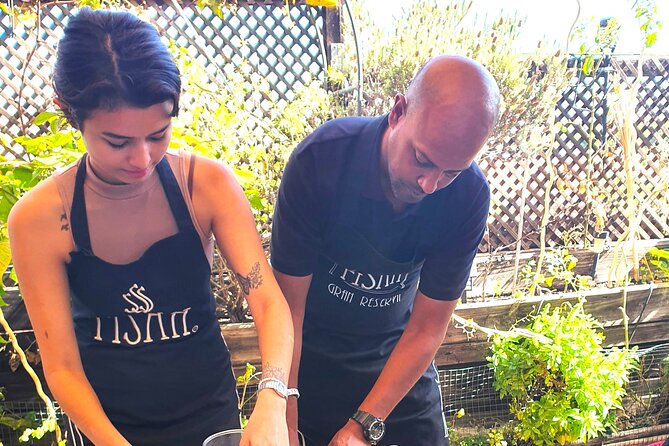
It also means you should set your expectations correctly. Your role may vary depending on group size and where you are standing when a task begins. In a smaller class, you may get more direct time with the ingredients. In a larger one, you may contribute to chopping or stirring, then watch the chef manage the most sensitive stages.
The instructors explain the background and cooking methods in English. Anthony has been praised for speaking several languages, while Tony, Yireles, Pedro, Carlos, Juan, Paulo, and Aurora have all been singled out for their friendly, clear approach. Names and staffing can change, but the repeated strength of the class is its approachable teaching style.
The lesson also includes some background on paella and its place in Spain. One useful point to keep in mind is that rice reached Spain through Arab influence, a detail that was not always explained clearly in every session. If food history matters to you, treat the historical talk as an introduction rather than a full lecture.
Same city, a different plate:
- Madrid Tapas & Wine Tasting Walking Tour – Small Group Local Bars
★ 5.0 · 3,644 reviews - Madrid Tapas & Taverns Small Group Food & History Tour
★ 5.0 · 2,664 reviews - Madrid: Small Group of Prado Museum Tour & Optional Tapas
★ 4.6 · 2,437 reviews - Madrid: Tapas & Wine Tasting Tour with Local Guide
★ 4.8 · 2,171 reviews
Rice texture and seafood timing
The main point of criticism is the cooking of the paella itself. Some people found the rice al dente, while others felt it needed a little more time. One person also reported that shrimp and mussels were not fully cooked.
That does not mean every batch has the same result. Rice texture is part of paella, and a firm bite can be intentional. Still, seafood needs careful attention, and you should check your portion before eating. If you have a serious seafood concern, mention it when you book and again at the start of the class.
This is the most important trade-off in the experience. You get a social, hands-on cooking event rather than a controlled restaurant kitchen. The chef is teaching a group, answering questions, and keeping the evening moving. If perfect restaurant consistency is your top priority, book a restaurant. If you want to learn the process and take part in the cooking, the small risk of uneven texture may be acceptable.
Sitting down to eat in the air-conditioned dining room
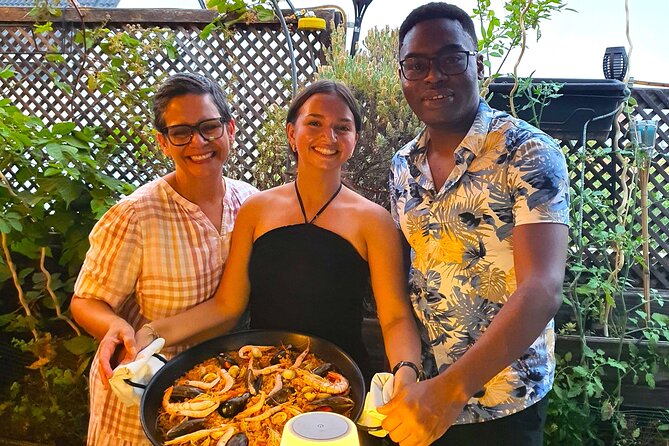
Once the paella is ready, you leave the cooking area and sit down in the air-conditioned dining room. The meal includes the tapas, paella, bottled water, sangria, and coffee or herbal tea.
The shared serving style fits the lesson. You helped make the dish, then get to judge the result with the people who cooked beside you. This is why the class works particularly well for families, couples, and groups of friends who want an activity that includes dinner rather than a separate cooking lesson followed by another restaurant booking.
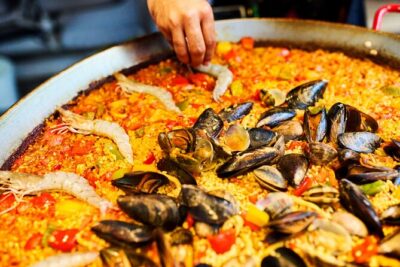
The seafood paella is the most traditional-looking choice on the listed menu, with shellfish, squid, saffron, and fish fumet. Chicken paella may suit diners who prefer familiar flavors. The vegan version is the practical choice for plant-based diners, but you should arrange it in advance rather than assume it is available automatically.
Dessert is not listed as a separate sweet course. Instead, the meal finishes with coffee or herbal tea, followed by the tasting of three national Spanish liquors. If you expect a pastry or other dessert, adjust your expectations before booking.
The three-liquor finish and a word about drinking
The final tasting adds a festive note to the evening. It is included in the price, along with the sangria, and several participants have enjoyed the generous drinks service.
This is also where the class can become too boozy for some people. You may have sangria during the preparation, more with the meal, and then three shots at the end. The sensible approach is to drink slowly, use the water provided, and remember that a three-hour cooking class is not a good place to test your alcohol limits.
For many people, the drinks help create the relaxed mood that makes the class memorable. For others, the amount may feel excessive. You can participate in the cooking and meal without treating every drink as an obligation.
Is $87.41 a fair price?
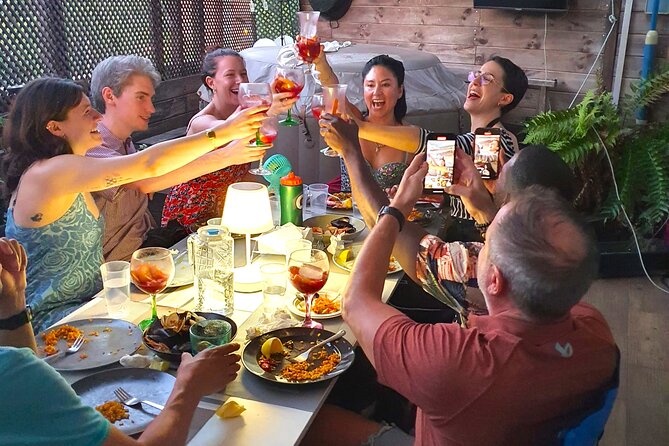
At about $87.41 per person, the cost is not cheap for a meal in Madrid. It becomes better value when you add up what is included: roughly three hours of instruction, ingredients, sangria, appetizers, paella, bottled water, coffee or tea, and the Spanish liquor tasting.
You also receive the recipes, which gives the experience value after you leave. The class teaches a dish you can attempt at home, although you may need a wide paella pan and the right rice to reproduce the result properly.
The price makes the most sense if you want an evening activity, not simply dinner. A restaurant can serve paella for less, but it will not give you the preparation lesson or the chance to cook with a group. The experience is also useful for a first visit to Madrid because it combines food, social contact, and a small amount of cultural context in one booking.
Groups can receive discounts, and private pickup is possible for an additional €50 for up to four people. Pickup costs more for larger groups, so public transportation is likely the simpler choice unless you have mobility or scheduling reasons to arrange a ride.
Who will enjoy this Madrid cooking class?
I would recommend it most strongly to people who like participating. Families with older children, couples, friends, and solo visitors who enjoy meeting others can all find a good fit here. The shared paella format makes it easier to talk than a formal demonstration where everyone sits silently.
It is also a good rainy-day or hot-afternoon plan because the final meal takes place in air conditioning. The class offers a break from museums and bars while still giving you an evening out.
You may want to skip it if you want a quiet meal, a private lesson, or exact control over your cooking station. The group can reach 25 people, and the class has a social, drink-focused side. Anyone with allergies, food intolerances, or strict dietary requirements should contact the provider before booking.
Free cancellation is available until 24 hours before the start time. Changes or cancellations inside that window are not accepted for a refund.
FAQ
Where does the paella and sangria class meet?
It meets at Paurora Experiences, C. de Carretas, 14, 2a, Centro, 28012 Madrid, Spain.
How long does the experience last?
The activity lasts approximately three hours.
What language is the class offered in?
The class is offered in English.
What food is included?
The meal includes appetizers, anchovy-stuffed olives, Spanish omelette, Iberian ham toast with tomato, and paella as the main course. Coffee or herbal tea is also listed.
Can I choose between seafood and chicken paella?
Yes. The listed main-course choices are seafood paella and chicken paella.
Is there a vegan or vegetarian option?
A vegan option is available, and vegetarian adjustments have been made. You must notify the provider in advance about dietary needs, allergies, or intolerances.
Are drinks included?
Yes. Sangria, bottled water, and a tasting of three traditional Spanish shots are included. The menu also lists coffee or herbal tea.
Is transportation included?
Private transportation is not included. Pickup may be arranged for €50 for up to four people, with different pricing for larger groups.
What is the cancellation policy?
You can cancel at least 24 hours before the start time for a full refund. Cancellations or changes made less than 24 hours in advance are not refunded or accepted.
Should you book it?
Book this class if you want to cook, eat, and talk with other people in Madrid. The strongest reasons are the shared paella preparation, friendly English-speaking instruction, useful recipes, and generous food and drink package.
Go in knowing that the class is social and alcoholic, and that rice or seafood texture may not be perfect every time. For most people, that is a fair trade for an evening that gives you a practical Spanish dish, a full meal, and a story to take home.
More Vegan and Vegetarian Tours in Madrid
- Seville Vegan Tapas Food and Market Walking Tour
★ 5.0 · 40 reviews - Plant-based Tapas and Wine Night Tour in Seville Spain
★ 5.0 · 17 reviews - Barcelona Vegetarian Tapas and Food Walking Tour in Gracia
★ 4.5 · 3 reviews
More Sangria and Tapas Tours in Madrid
- 10 Tapas Cooking Class Experience in Madrid with Sangria
★ 5.0 · 137 reviews - Madrid: Paella and Sangria Workshop with Tapas
★ 4.9 · 128 reviews - Authentic Paella in Madrid: A Hands-On Class with Tapas & Sangria
★ 4.0 · 7 reviews - Barcelona Paella Cooking Class with Market Visit, Tapas & Sangria
★ 5.0 · 2,531 reviews
Just added around Madrid
- Try Madrid Best Churros, Tapas & Market by FLT★ 5.0 · 37 reviews
- Private Wine & Gourmet Tapas Tour in Madrid with Sommelier★ 5.0 · 49 reviews
- Madrid Food Tour – Tapas Walking Tour★ 5.0 · 3 reviews
- Madrid: Private Tapas & Wine Food Walking Tour in La Latina★ 5.0 · 4 reviews
- Culinary tour “Tapas & Wines” in Madrid★ 5.0 · 3 reviews
- Tasting Madrid: Tapas Private Guided Tour (Customizable)★ 5.0 · 7 reviews
- Guided Tapas and Flamenco in Madrid★ 4.5 · 21 reviews
- Flamenco show & tasting Tapas with panoramic views in Madrid★ 4.5 · 6 reviews
Paella Cooking Classes, compared.
Barcelona Paella Cooking Class with Market Visit, Tapas & Sangria
Read our review →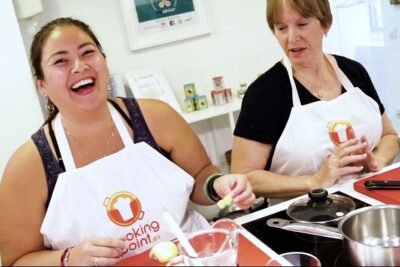
Spanish Cooking Class Paella Tapas and Sangria in Madrid
Read our review →
Barcelona Food Tour: Tapas, Paella, Sangria & 8+ Local Tastings
Read our review →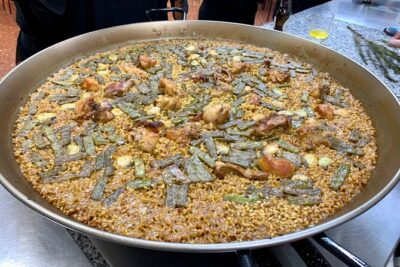
Valencian paella cooking class, tapas and visit to Ruzafa market.
Read our review →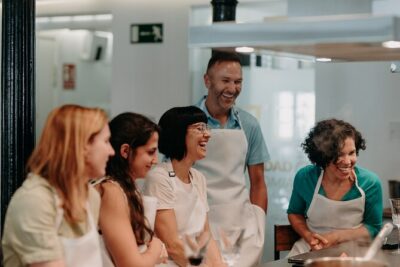
Madrid Tapas & Paella Cooking Experience with Local Market Visit
Read our review →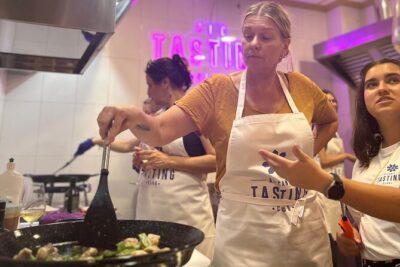
Alicante Paella Cooking Class, Tapas, Drinks and Marketplace
Read our review →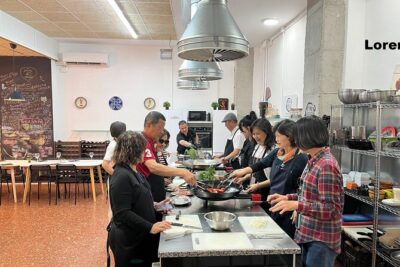
Seafood paella cooking class, tapas and visit to Ruzafa market.
Read our review →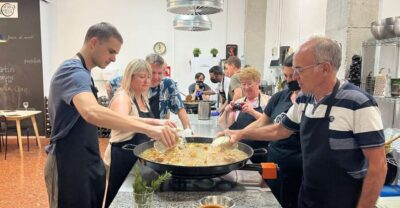
Evening Guided Paella Workshop, Tapas, and Drinks
Read our review →Browse the lists this tour appears in